
On-chain security analysis — is it a scam or legit?
Is this your token? Publish your own audit on this page →
0xd058…1697
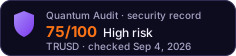
The TrUSD contract implements an upgradeable ERC-20 token with a two-tiered access control system. While leveraging battle-tested OpenZeppelin libraries and a multisig for the primary admin role, a significant risk arises from the immediate execution capabilities of the TIMELOCK_ADMIN_ROLE for critical functions like token minting and contract upgrades, lacking the timelock present for the DEFAULT_ADMIN_ROLE. This centralization of immediate power, if compromised, could lead to severe economic or operational consequences.
Share held by contracts — treasury, vesting, bridge or staking — is discounted against share held by wallets when the score is computed: a contract cannot decide to sell the way an anonymous holder can, though it can still be drained or voted to sell. Effective concentration is the figure the risk score is actually calculated from.
The risk score reads depth across every pair. The volume figure and the volume-to-liquidity ratio elsewhere on this page describe only the pair this audit analysed, so the two are not directly comparable.
0xb5af…2b720xfb16…f023No privileged address appears among these holders: the unlocked liquidity sits with independent providers, not with the deployer.
Each factor is an on-chain fact recorded at the time of this analysis. The score is computed from them by a deterministic function, so the same contract returns the same score for anyone who runs the audit. How scores are computed
Our AI-powered scanner gives you a deeper, real-time smart contract analysis — free, with every scoring factor shown.
Get Detailed Audit