
On-chain security analysis — is it a scam or legit?
Is this your token? Publish your own audit on this page →
0xc07e…0589
The PeerToken contract is an ERC-20 token with burnable and permit functionalities, extending OpenZeppelin's standard implementations. It introduces a dedicated 'minter' role, separate from the 'owner', to control token supply. The contract's primary security strength lies in its use of well-audited OpenZeppelin libraries and a Timelock for the owner role. However, the centralized and unlimited minting capability by the 'minter' poses a significant economic risk, as a compromise of this role could lead to arbitrary token inflation and devaluation.
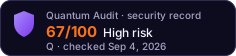
The risk score reads depth across every pair. The volume figure and the volume-to-liquidity ratio elsewhere on this page describe only the pair this audit analysed, so the two are not directly comparable.
0x1a28…7af40xf949…02980x0141…ba140x15bf…f86cNo privileged address appears among these holders: the unlocked liquidity sits with independent providers, not with the deployer.
Each factor is an on-chain fact recorded at the time of this analysis. The score is computed from them by a deterministic function, so the same contract returns the same score for anyone who runs the audit. How scores are computed
Based on automated analysis, Quack AI Token scores 64/100 (High Risk) on our risk scale. No honeypot was detected, but always verify independently before investing.
Our scanner flagged a risk score of 64/100. Ownership has not been renounced, which is a risk factor. DYOR before purchasing any token.
The contract has not been verified on-chain. Verification is not the same as a full security audit. Use Quantum Audit's free tool to run a deeper analysis of the contract code.
Our AI-powered scanner gives you a deeper, real-time smart contract analysis — free, with every scoring factor shown.
Get Detailed Audit