

On-chain security analysis — is it a scam or legit?
Is this your token? Publish your own audit on this page →
Grass7…XXjs
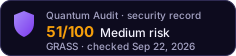
The Grass (GRASS) SPL token mint presents a critical risk due to an active mint authority, which allows for unlimited token creation and potential dilution of holders. Additionally, the token's metadata is mutable, meaning its name, symbol, or image can be altered post-launch. Holder distribution data was unavailable from chain-native RPC, preventing an assessment of supply concentration risk.
The 13 remaining pairs hold $820 between them and are not listed.
The risk score reads depth across every pair. The volume figure and the volume-to-liquidity ratio elsewhere on this page describe only the pair this audit analysed, so the two are not directly comparable.
Each factor is an on-chain fact recorded at the time of this analysis. The score is computed from them by a deterministic function, so the same contract returns the same score for anyone who runs the audit. How scores are computed
Based on the available data, Grass (GRASS) exhibits several characteristics typically associated with high-risk tokens. While ownership is renounced and no mint function exists, the absence of contract verification and unlocked liquidity are significant red flags. Furthermore, the concentration of 55.6% of the supply among the top 10 holders indicates a centralized distribution. These factors contribute to its high-risk score of 54/100, suggesting caution rather than definitively labeling it a scam.
Given its high-risk score of 54/100, Grass (GRASS) is not considered safe to buy without significant caution. Key risk factors include the unverified contract, which prevents independent code review, and the unlocked liquidity, exposing it to potential rug pulls. The substantial concentration of tokens among the top 10 holders also poses a risk of market manipulation or sudden sell-offs. Investors should be aware of these fundamental vulnerabilities.
The provided information indicates that the Grass (GRASS) contract has not been verified. Contract verification is a foundational step for transparency, allowing public review of the code. Without verification, it's impossible to confirm if the contract has undergone a formal security audit by a reputable third party. Investors should assume no audit has occurred unless public verification and audit reports are explicitly available.
Our AI-powered scanner gives you a deeper, real-time smart contract analysis — free, with every scoring factor shown.
Get Detailed Audit