Very Low Liquidity
Total DEX liquidity is $8,051. Slippage will be severe; large positions cannot be exited without significant loss.
On-chain security analysis — is it a scam or legit?
Every audit run adds a dated snapshot — history is append-only and cannot be edited.
The Cup Markets (CUP) token exhibits a high economic risk due to very low DEX liquidity ($8,051), which can lead to severe slippage. Additionally, the token's metadata is mutable, allowing for changes to its name, symbol, or image post-launch. Key authorities like Mint and Freeze are revoked, which is a positive security aspect. Holder distribution data was unavailable from chain-native RPC.
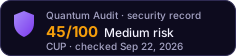
Each factor is an on-chain fact recorded at the time of this analysis. The score is computed from them by a deterministic function, so the same contract returns the same score for anyone who runs the audit. How scores are computed
Total DEX liquidity is $8,051. Slippage will be severe; large positions cannot be exited without significant loss.
Token name, symbol, or image can be changed post-launch.
The provided data points for Cup Markets (CUP) indicate several high-risk factors that are commonly associated with potential scams, though it does not definitively label it as such. Key concerns include an unverified contract, unrenounced ownership, and unlocked liquidity. However, the absence of a mint function is a positive signal. Investors should be aware of these fundamental risks when evaluating CUP and conduct thorough due diligence.
Investing in Cup Markets (CUP) carries significant risks, highlighted by its high-risk score of 65/100. Key safety concerns include the contract not being verified, making its underlying code opaque. Furthermore, ownership of the contract has not been renounced, leaving significant control with the deployer. The liquidity also remains unlocked, posing a risk of removal. These factors suggest a high-risk environment that investors should carefully consider.
The provided information indicates that the Cup Markets (CUP) contract has not been verified. Contract verification is a foundational step, making the code publicly visible and available for review by security analysts and the community. Without verification, a formal audit by a reputable third-party security firm is highly unlikely, as the auditor would first require access to the verifiable source code.
Our AI-powered scanner gives you a deeper, real-time smart contract analysis — free, no signup required.
Get Detailed Audit