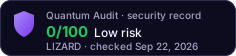
The LIZARD token on Solana presents a mixed but predominantly high-risk profile for investors. Crucially, the contract remains unverified, meaning its underlying code is not publicly auditable or transparent on the blockchain, hindering independent security analysis. Ownership has not been renounced, which allows the developer to potentially modify contract parameters or drain funds. A positive signal is the absence of a mint function, preventing the creation of new tokens and potential supply inflation. Holder distribution appears decentralized, with the top 10 holders owning 0.0% of the total supply, mitigating whale concentration risks. However, the project's liquidity, currently at $58,607 with a 24-hour volume of $206,769, is not locked. This exposes investors to significant risk, as liquidity providers could withdraw funds, severely impacting trading. The composite risk score of 65/100 reflects these critical vulnerabilities and suggests a very high-risk investment.
The LIZARD token's high risk score of 65/100 is primarily driven by three critical security red flags. First, the unverified contract means investors cannot independently confirm the code's functionality or absence of malicious logic, demanding a high degree of trust in the developer. Second, ownership has not been renounced, maintaining centralized control and the potential for a 'rug pull' or contract manipulation. Third, and perhaps most concerning, the project's liquidity is not locked. This poses a direct threat, as liquidity providers can withdraw funds at any time, potentially collapsing the trading pool and leaving investors unable to sell their tokens. These combined factors underscore a very elevated risk of capital loss.
Based on the available data, classifying LIZARD definitively as a scam is not possible without further investigation. However, several critical red flags indicate extremely high risk. The unverified contract, unrenounced ownership, and unlocked liquidity are common characteristics found in projects that ultimately fail or defraud investors. These factors collectively contribute to its high-risk score, warranting extreme caution.
No, LIZARD is not considered safe to buy based on its current security profile. It carries a high-risk score of 65/100. Key risk factors include an unverified contract, unrenounced ownership, and unlocked liquidity. These conditions create significant potential for malicious actions like rug pulls or contract changes, making investment in LIZARD highly speculative and exposed to substantial capital loss.
The LIZARD token contract is currently not verified on the blockchain, which means its code is not publicly viewable for inspection. While contract verification is a prerequisite for a formal audit, it is not an audit itself. Without verification, a professional security audit cannot be performed or validated, leaving significant security unknowns.
Paste any contract address and get an instant AI-powered security report in seconds.
Run Free Audit